Process Automation: The Silent Revolution of Transport Operators
2025-11-20T15:05:50.872Z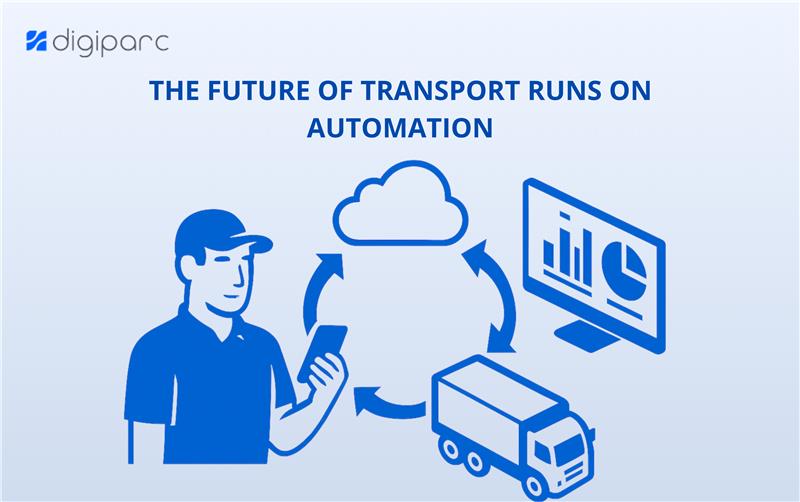
In the transport and logistics sector, efficiency no longer depends solely on the number of kilometers traveled or the best delivery time.
In 2025, real differentiation comes from the fluidity of internal processes, the reliability of data, and the ability to eliminate repetitive manual tasks that generate errors, hidden costs, and wasted time.
This silent revolution, driven by the most advanced transport operators, relies on one key word: automation.
1. Automation: an underestimated strategic lever
Most dysfunctions in transport operations do not come from the road… but from administration:
- • forgotten cash movements
- • statuses not updated
- • poorly synchronized tickets or reservations
- • manually calculated penalties
- • incomplete invoices due to missing fees or services
- • human errors linked to fatigue or overload
Each omission creates discrepancies, loss of visibility, and sometimes customer disputes.
Automation solves this at the source.
2. Automatic cash movements: no more gaps in cash flow
For a long time, ticketing operations, baggage registrations, or web bookings were processed in two steps:
- • commercial operation (ticket sale, baggage creation…)
- • manual entry of the cash movement
Problem: a single omission, delay, or error is enough to unbalance the cash register and complicate financial controls.
With Digiparc, this process becomes automatic:
- • a confirmed ticket → a cash movement is created instantly
- • registered baggage → the cash register updates immediately
- • a validated web reservation → the balance recalculates without human intervention
Result: an accurate, traceable cash register, without losses or omissions.
3. Automatic statuses: smoother operations
In transport operations, statuses are essential: they determine real-time tracking, planning visibility, and invoicing.
Automation has eliminated many irritants:
- • the driver enters the departure mileage → the trip status switches automatically to "On the road"
- • they enter the arrival mileage → the trip switches to "Delivered"
- • an LLD contract reaches the system date → it automatically becomes "Active"
- • an amendment is validated → the previous one closes automatically
Fewer clicks, fewer omissions, and planning that is always up to date.
4. Automatic deletion of unpaid reservations: saving space (and time)
One of the most costly problems for ticketing operators?
Ghost reservations: seats blocked but never paid for.
They prevent the sale of available seats, disrupt bus organization, and distort statistics.
Thanks to automation:
- • unpaid web reservations within the configured time limit are automatically deleted
- • seats are instantly released
- • grids and route sheets become reliable again
Immediate optimization of seat occupancy.
5. Automatically calculated penalties: accuracy and fairness
Whether in transport, long-term rental, or additional services, manual penalty calculation leads to:
- • calculation errors
- • inconsistencies
- • customer disputes
Operators now want rules, not interpretation.
Automated examples:
- • early return penalties calculated based on remaining months
- • mileage- or time-based penalties calculated from real values (actual km – planned km)
- • integrated formulas with coefficients and durations
Reliable, consistent, and transparent invoicing.
6. Why automation truly changes the game
Because it allows operators to:
✔ eliminate repetitive tasks
Teams focus on operations, not corrections.
✔ reduce human errors
Automatic rules ensure perfect consistency.
✔ secure cash flow
No more omissions, no more unbalanced cash registers.
✔ obtain clean data
A prerequisite for any BI or reporting project.
✔ streamline collaboration between field and back-office
The system synchronizes everything in real time, without depending on people.
Conclusion: automation is no longer optional—it’s a competitive advantage
Far from being a gadget, process automation is becoming the performance engine of modern transport operators.
It allows them to:
- • make operations more reliable
- • accelerate processing
- • reduce costs
- • offer a smoother customer experience
The next revolution in transport will not take place on the road… but in companies’ ability to automate everything that can be automated.