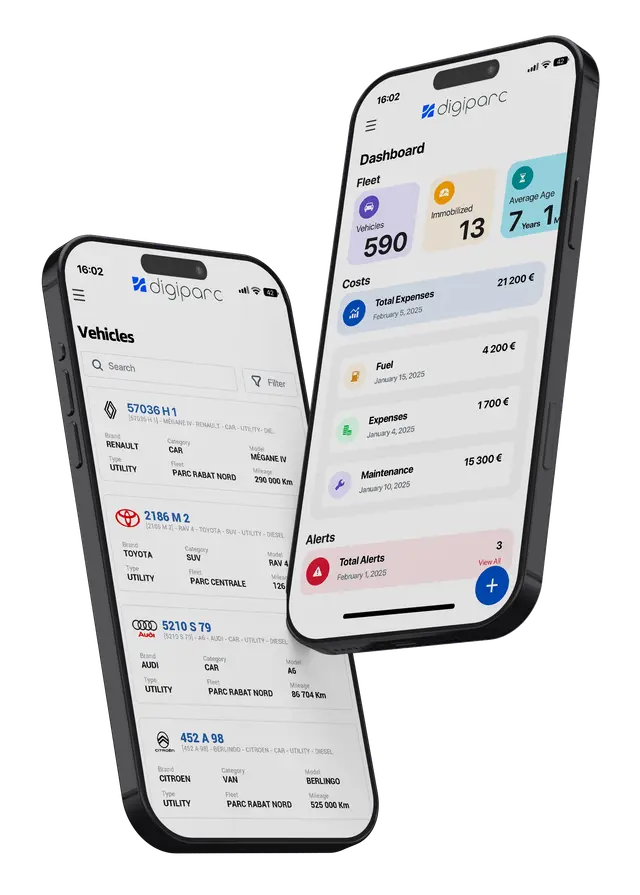
Fleet optimization is about more than vehicle management – it's about leveraging data to improve performance, reduce costs and increase overall efficiency. Tracking the right metrics allows fleet managers to make informed decisions and stay competitive. Here is10 essential indicators to monitor :
1. Fuel efficiency (L/100 km or km/L)
Fuel represents one of the highest operational costs. Tracking fuel consumption helps identify inefficient vehicles or driving habits, enabling corrective actions like route optimization or driver training.
2. Vehicle utilization rate
Measure the efficiency of use of your vehicles. A low utilization rate can indicate overcapacity, while a high utilization rate can lead to maintenance issues.
3. Maintenance costs per vehicle
Regular maintenance is essential, but tracking costs per vehicle ensures you don't overspend or miss crucial repairs. It also helps plan the replacement of aging vehicles.
4. Driver behavior
Indicators such as speeding, harsh braking or idling highlight risky or inefficient behaviors. Driver training programs can improve safety and reduce fuel waste.
5. Immobilization rate
Every minute a vehicle is out of service represents lost productivity. Tracking this rate helps ensure vehicles are repaired and returned to service quickly.
6. Cost per kilometer
This metric provides a clear view of operational expenses, helping to identify inefficiencies and allocate budgets more effectively.
7. Accident frequency
Accident tracking helps identify trends, such as risky journeys or drivers requiring additional training, which improves safety and reduces insurance costs.
8. Accuracy of delivery or service times
For fleets involved in logistics or services, meeting deadlines is a crucial indicator. It impacts customer satisfaction and highlights possible delays in your operations.
9. Fleet age and depreciation
Older vehicles can result in higher maintenance costs and reduced fuel efficiency. Tracking the age of the fleet helps determine the optimal time to replace them.
10. Compliance indicators
Whether it’s emissions standards or driver certifications, ensuring compliance helps avoid legal penalties and maintain operational integrity.
Why Indicators Matter
By regularly monitoring these metrics, fleets can identify inefficiencies, reduce costs and improve productivity. Tools like fleet management software make it easier to collect, analyze and use this data in real time.