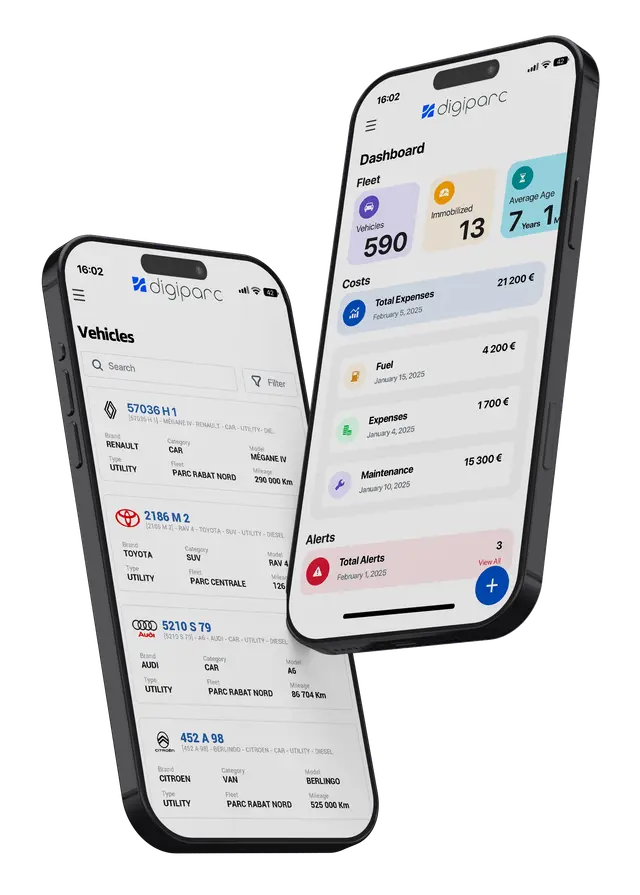
A Digiparc analysis
In 2026, road transport faces a profound transformation. Between economic pressure, regulatory developments, forced modernization of fleets and growing customer expectations, carriers must rethink their management methods to remain competitive.
This comprehensive guide analyzes road transport trends in 2026, the major challenges of the sector and the optimization strategies to implement to strengthen operational performance.
Key trends in road transport in 2026
The road transport market is evolving rapidly. Here are the dominant trends:
- -sustainable drop in freight rates linked to overcapacity,
- -generalized increase in operating costs,
- -shortage of drivers still present,
- -tightening of environmental standards,
- -rise of digitalization and AI,
- -growing needs for visibility and cost management.
These trends are forcing fleet managers to adopt more precise and technological methods to maintain profitability.
The main challenges of road transport and freight in 2026
1. Overcapacity and pressure on transport prices
Overcapacity remains a structural problem in 2026. It leads to:
- -constant pressure on prices,
- -increased competition,
- -low margins,
- -a postponement of investments in fleet renewal.
Many careers adopt a strategy“extended replacement cycle”, sometimes to the detriment of vehicle maintenance and availability.
Recommended Strategies
To better manage this pressure:
- -analyze the profitability of each vehicle,
- -reduce or redistribute capacity if necessary,
- -identify overly expensive assets,
- -optimize renewal cycles,
- -monitor utilization rates.
Fine management of operational data becomes an essential lever for stabilizing margins.
2. Unstable operating costs that are difficult to predict
In 2026, fleet managers must deal with volatile costs:
- -fuel,
- -insurance,
- -maintenance,
- -spare parts,
- -compliance,
- -environmental taxes.
Each variation can have a major impact on profitability.
Recommended Strategies
To control these costs:
- -centralize information relating to expenses,
- -automate cost tracking per vehicle,
- -anticipate maintenance via alerts or preventive maintenance,
- -optimize journeys and fuel consumption,
- -compare performances between vehicles.
The more reliable data a fleet has, the faster it can act.
3. Shortage of drivers and difficulty building loyalty
The driver shortage does not disappear in 2026.
Challenges include:
- -high turnover,
- -demanding working conditions,
- -aging of the workforce,
- -increasing salary expectations.
Recommended Strategies
To attract and retain drivers:
- -simplify internal processes,
- -modernize the tools used on a daily basis,
- -improve communication and transparency,
- -offer better visibility on schedules and missions,
- -enhance performance.
A modern driver experience becomes an important competitive advantage.
4. Environmental regulations and energy transition
The ecological transition will accelerate in 2026. Carriers must:
- -adopt cleaner vehicles,
- -anticipate the impact of low-emission zones,
- -follow strict compliance obligations,
- -control the costs linked to new engines.
Recommended Strategies
To make this transition successful:
- -analyze the total cost of ownership (TCO) of thermal and electric vehicles,
- -define a transition schedule,
- -select the types of engines most suited to real journeys,
- -anticipate the necessary investments.
- -Companies that start structuring their transition now will get a head start.
5. Digitalization: the essential performance lever in 2026
Digitalization is emerging as a strategic pillar. It allows:
- -a global, real-time vision of the fleet,
- -management based on precise data,
- -more predictive maintenance,
- -a reduction in costs,
- -simplification of operations,
- -improved driver satisfaction.
Recommended Strategies
To take advantage of digitalization:
- -centralize all fleet data in a single environment,
- -automatic repetitive processes,
- -use telematics to obtain reliable information,
- -set up decision-making dashboards,
- -gradually integrate AI and predictive maintenance solutions.
- -The most efficient fleets in 2026 are those which have already integrated these tools
Outlook 2026: how to stay competitive in a changing market?
To maintain their competitiveness, carriers will need to:
- -adopt a much more analytical approach,
- -invest in advanced monitoring tools,
- -anticipate regulatory changes,
- -improve the experience of their drivers,
- -modernize their operational management,
- -continuously optimize their costs and capacity.
The market now rewards companies that can anticipate rather than react.
Conclusion: 2026, the year when strategy becomes essential.
The challenges of road transport and freight in 2026 can no longer be managed with traditional methods.
To remain efficient, fleets must:
- -control their costs,
- -modernize their tools,
- -optimize their assets,
- -anticipate the ecological transition,
- -place data at the heart of the decision.
New approaches and technologies now make it possible to completely transform fleet management.
Companies that choose to explore these possibilities will gain a real lead in a rapidly changing sector.